Haridwar
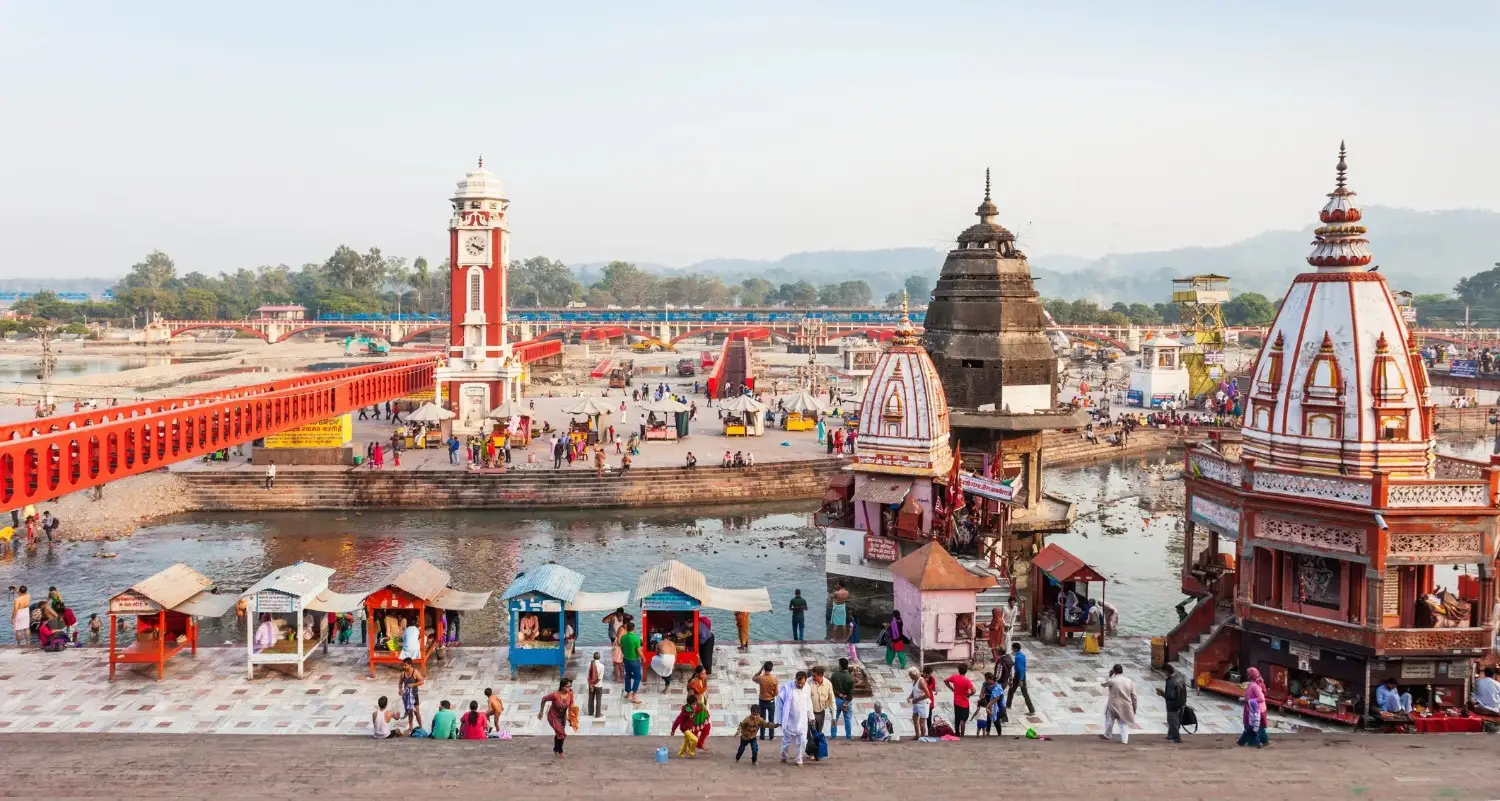
Haridwar literally means Gateway to God. This holy town is the place where the sacred Ganga descends to the plains. Haridwar forms one of the four important pilgrimage centres of India which host the famous Kumbh Mela. As per ancient Indian texts, drops of Amrit or nectar fell from the pitcher, being carried by Garuda- the heavenly bird in the four holy towns of Haridwar, Ujjain, Nasik, and Allahabad. In Haridwar, this spot is called the 'Brahma Kund' or 'Har-ki-Pauri'. Every yea,r thousands of pilgrims take a dip in the river Ganga, with the desire to attain salvation.
Haridwar, often referred to as the Gateway to the Himalayas, is a sacred town situated at the confluence of the Ganges and Chandrabhaga rivers. Nestled at the foothills of the lower Himalayas in the state of Uttarakhand, India, Haridwar is renowned for its natural beauty and spiritual significance.
The city serves as the starting point for the revered Chota Char Dham pilgrimage, leading to the holy shrines of Kedarnath, Badrinath, Gangotri, and Yamunotri. Its strategic location makes it a vital gateway to several important religious destinations in northern India.
Famous for its ancient temples, yoga and meditation centers, and vibrant adventure tourism, Haridwar attracts visitors from around the world. Activities such as white-water rafting, bungee jumping, and trekking are particularly popular, with the rafting season running from March to September.
Haridwar is surrounded by the three prominent districts of Tehri Garhwal, Pauri Garhwal, and Haridwar, making it a central hub in the spiritual and cultural landscape of Uttarakhand.