Charpankh Pilgrims

The Legend of Panch Kedar

The Legend of Panch Kedar

The five Kedar lie in the valleys between the rivers Bhagirathi and Alaknanda. The term Kedar itself means a natural rock formation or a glacial moraine. According to legend, Himalayas Kedarnath, According to mythology, after the Kurukshetra war Mahabharata. When the Kauravas refused to grant the Pandavas even a small portion of their kingdom, the dispute escalated into the devastating battle of Kurukshetra.

Although the Pandavas emerged victorious, the bloodshed weighed heavily on their conscience — they had slain their own kin. Seeking redemption for this sin, they journeyed to Varanasi in search of Lord Shiva, the destroyer and purifier. But Shiva, angered by the carnage, chose to avoid them entirely.

When he saw the Pandavas approaching, Lord Shiva assumed the form of a bull to conceal himself. Yet, Bhima recognized the disguise. As Shiva tried to vanish into the ground, Bhima grabbed the bull’s tail and hind legs. The bull’s hump remained above ground — this sacred form is worshipped at Kedarnath.

Shiva then manifested in four other places —
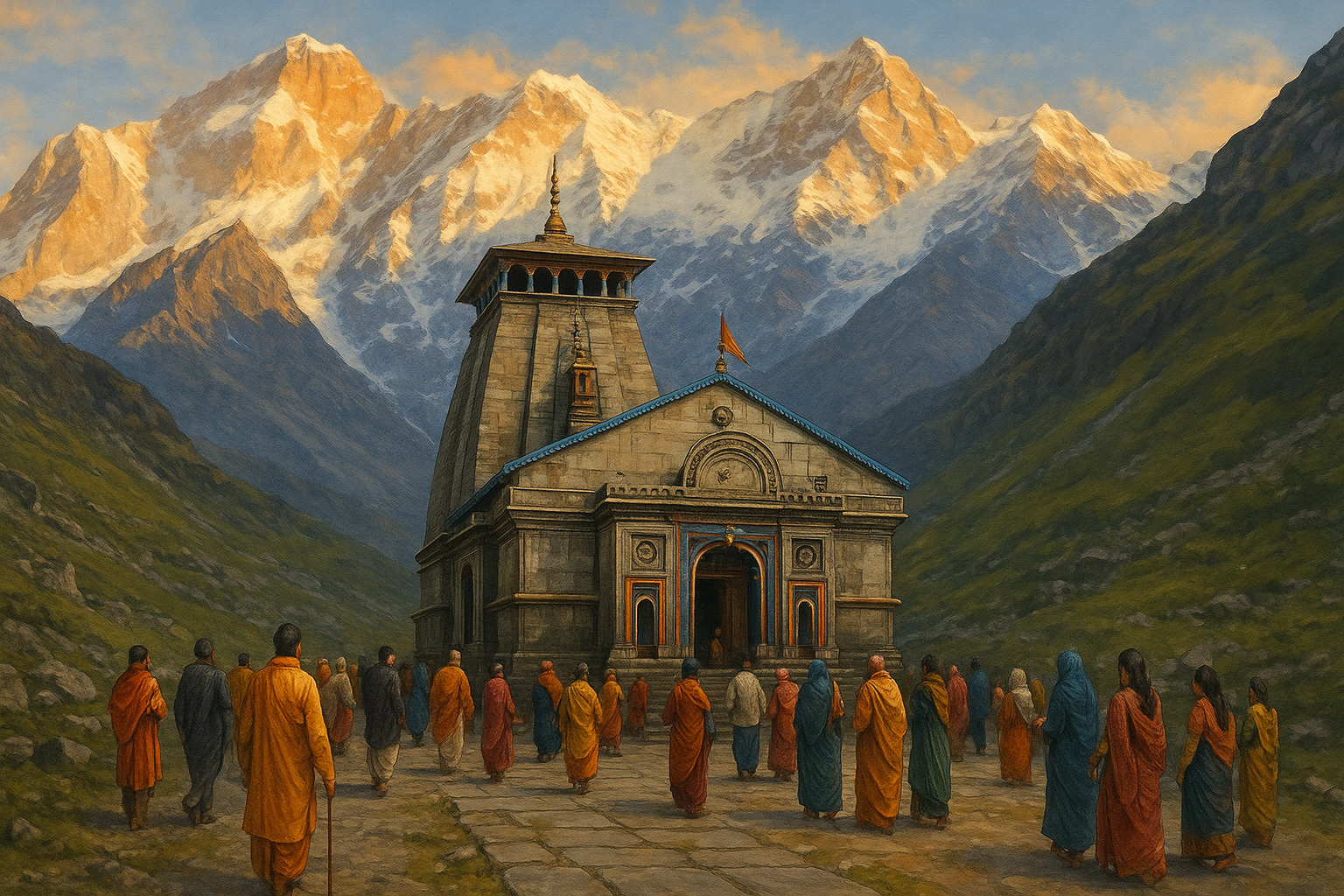
  • Kedarnath — Hump of the bull
  • Tungnath — Arms
  • Madhyamaheshwar — Navel
  • Rudranath — Face
  • Kalpeshwar — Hair

Let Us Call You

  • The Legend of Panch Kedar
  • Deities Worshipped:Lord Shiva
  • Himalayan Circuit :Five Shrines Temples
  • Himalayan Region:Garhwal Himalayas
  • Famous for:Pilgrimage
  • Pilgrimage Season:May to October.

1. Kedarnath

The holiest of Shiva’s shrines is likened to gold among base metals so that every pilgrim finds peace here, and it is said that devotees who die here become one with Shiva himself. The temple of Kedarnath, located at a height of 3,581 mts, stands at the head of the Mandakini river, with Kedarnath peak keeping vigil above it. The temple is dedicated to the Sadasiva or invisible form of Shiva, and is represented by a natural rock formation. Beyond the temple is the highway to heaven, called Mahapanth.

Discover More
kedarnath

2. Madmaheshwar

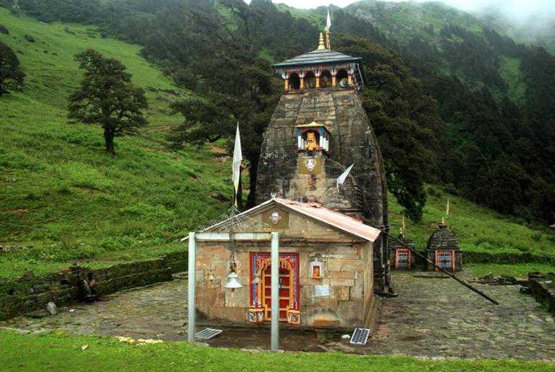
Shiva is worshipped at Madmaheshwar in the form of navel-shaped lingam. Located at the base of Chaukhamba peak, at an altitude of 3,289 mts, the classic temple architecture belongs to the north–Indian style. So sanctified is the water here that even a few drops are considered sufficient for absolution. The natural scenery is dramatically wild, with deep gorges and Himalayas valleys, mountainsides flung upwards towards the skies, and forests where the snow lies thick in winter, only to be replaced by a carpet of greenery in the summer. Kedarnath and Neelkanth peaks are also visible from here, the entire ring of mountains associated with the life and times of Shiva. The confluence of two streams at Gaundar just short of the temple, is one of the prettiest spots in the region.

Discover More
madhmaheshwar

3. Tungnath

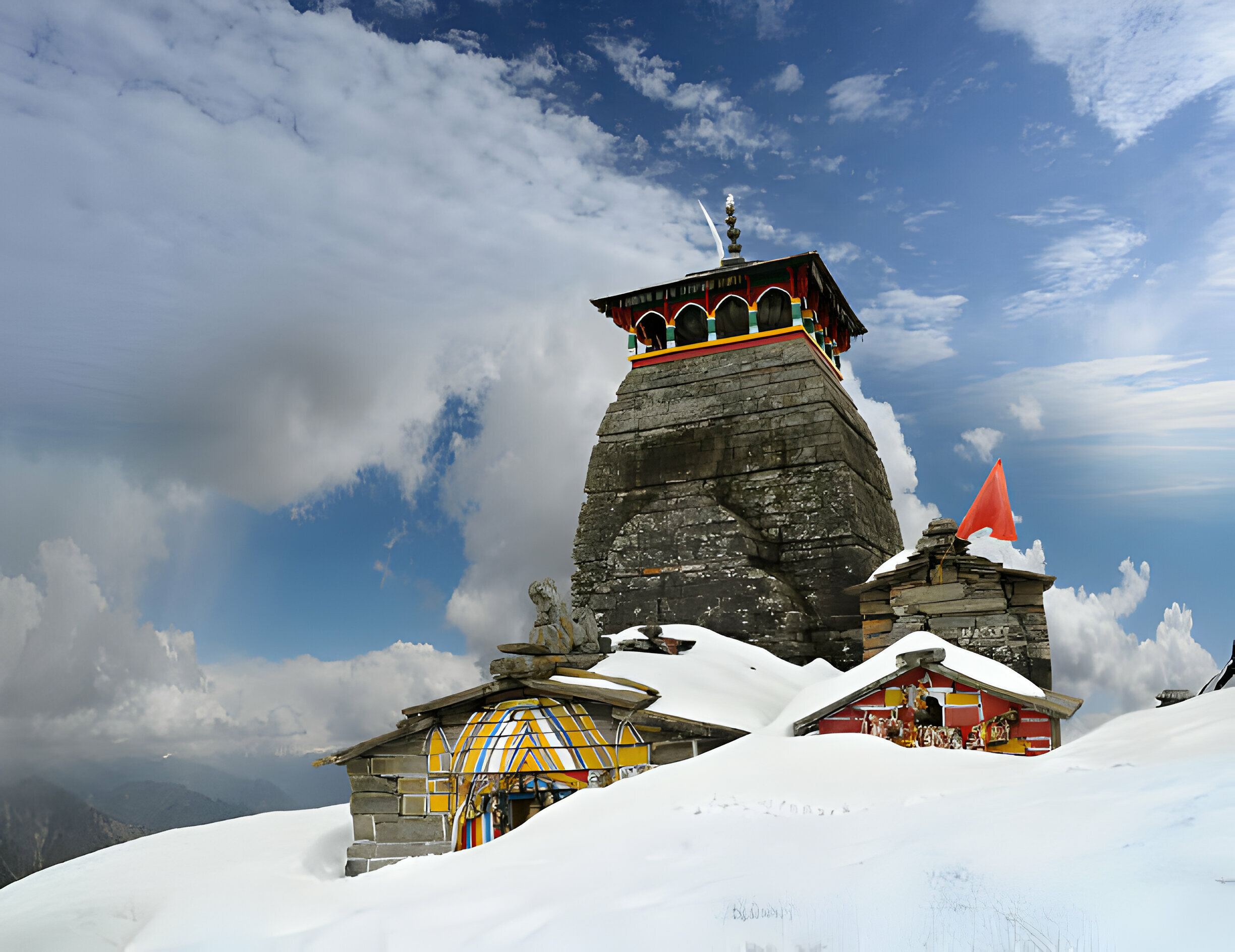
The sanctity of the region of Tungnath is considered unsurpassed. The peak of Tungnath is the source of three springs that form the river Akashkamini. At this temple at 3,680 mts, Shiva’s arm is worshipped. The highest Hindu shrine in the Himalayas, 3 kms uphill from Chopta, Tungnath is reached through a path that wends through alpine meadows and rhododendron thickets. An hour’s climb from here leads to Chandrashila with its panoramic views. The entire journey and the shrine are located in some of the finest, most picturesque pockets of the Himalaya.

Discover More
tung_nath

4. Rudranath

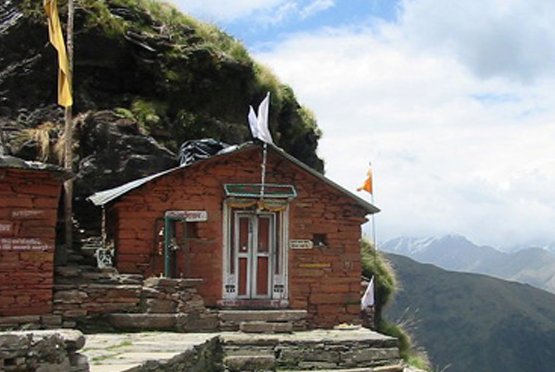
Devotees come to Rudranath to offer ritual obeisance to their ancestors, for it is here, at Vaitarani river, that the soul of the dead cross when entering another world. The temple of Rudranath at 2,286 mts, entails trekking through ridges at almost twice that height before reaching the meadow where it is located. Within the sanctum, Shiva’s image is worshipped in the form of his face. The temple is surrounded by several pools – Surya Kund, Chandra Kund, Tara Kund, Manas Kund – while the great peaks of Nanda Devi, Trishul and Nanda Ghunti rear overhead.

Discover More
rudranath

5. Kalpeshwar

A favorite spot for sages who come here to meditate, following the precedent of Arghya who performed austerities and created the celebrated nymph, Urvashi, here, and the irascible Durvasha who meditated under the wish-fulfilling tree, Kalpavriksha. Pilgrims pray at the small rock temple at a height of 2,134 mts. before the matted tresses of Shiva enshrined in rock in the sanctum sanctorum. The sanctum is preceded by a natural cave passage. Surrounded by thick forests and terraced fields in the Urgam valley, the temple is reached following a 10 km long trek.

Discover More
kalpeshwar

Ready to Begin Your Spiritual Journey?

Join thousands of pilgrims who have experienced the divine blessings of Chardham Yatra.